Homeowners Insurance Explained: Coverage, Costs and Claims
How homeowners insurance works in the US: dwelling, property and liability coverage, policy types, flood and earthquake gaps, what affects premiums and how to file claims.
 Tradiciones del Mundo
Unemployment insurance replaces part of your wages after a job loss. Eligibility depends on your work history and, for immigrants, on being authorized to work while you claim.
Key points
Losing a job is stressful, and for immigrants it can also raise status questions. Unemployment insurance (UI) provides temporary partial wage replacement while you look for work. Because UI is earned through work and funded by employer taxes, using it does not count against you under the current public charge rule. This guide explains eligibility, the special situation of visa holders and how to apply.
Apply in the week you lose your job: benefits usually start from the date of your claim, not the date of your layoff.
| Status | Typical situation |
|---|---|
| Permanent resident | Eligible on the same basis as citizens |
| Refugee, asylee | Eligible, with continuing work authorization |
| Open-market EAD holder | Often eligible while the EAD is valid |
| H-1B, L-1, O-1 and similar | Generally not eligible after job loss, since work authorization is tied to the employer |
| H-4 or L-2 spouse working with authorization | Depends on continuing authorization and state review |
| No work authorization | Not eligible |
States verify status through the federal SAVE system. Rules and interpretations differ, so check your state's guidance.
Benefits are a percentage of prior wages up to a weekly maximum that varies widely by state. Most states pay up to 26 weeks; some pay fewer. Benefits are taxable income for federal purposes.
H-1B and similar workers generally have a grace period of up to 60 days to find a new sponsor, change status or leave. Since they are not authorized to work for other employers until a new petition is filed, they typically cannot certify availability for work, which is why UI is rarely available to them. An emergency fund matters more for them. See emergency funds.
A hypothetical permanent resident warehouse supervisor is laid off after four years. He files a claim the same week, provides his green card number, and receives weekly benefits after his state's waiting week, while certifying job searches each week. He finds a new job two months later and stops claiming.
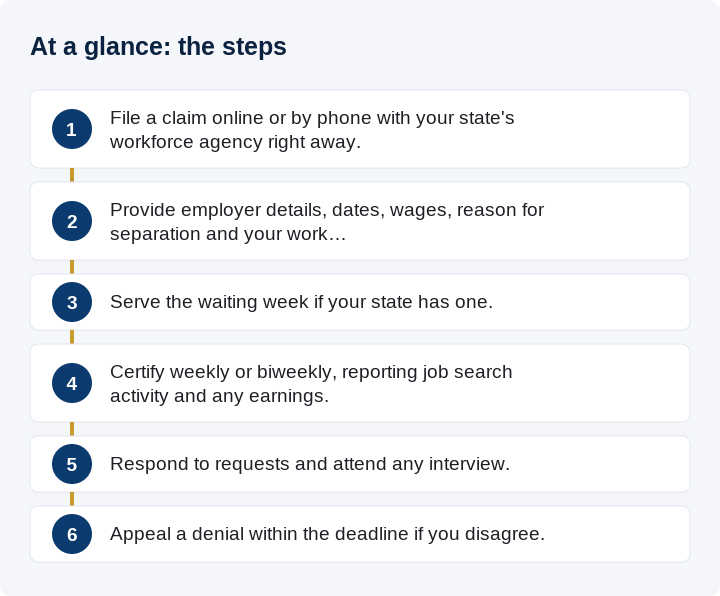
Each week you claim, you confirm you are physically able to work, available to accept suitable work and actively looking. Traveling abroad, being unable to accept work because of childcare, or lacking work authorization can make you ineligible for that week. Many states require registration with the state job bank and a minimum number of job contacts per week, which you should record in detail.
Denials can be appealed, often with a hearing by phone, and many claimants win appeals when they bring documents and witnesses.
Unemployment benefits are taxable federal income and taxable in many states. You can ask the state to withhold 10% for federal taxes when you apply, which avoids a surprise bill at tax time. You receive Form 1099-G in January. If the state later decides you were not eligible, it may ask you to repay benefits; respond to any notice quickly and appeal if you disagree.
A hypothetical asylum applicant with a valid work permit is laid off from a factory job. He files a claim and presents his EAD; the state verifies it through SAVE and approves benefits for as long as his EAD remains valid. He files his EAD renewal early so that a gap in work authorization does not interrupt his eligibility.
No. It is an earned benefit, not counted under the current rule.
Many states pay partial benefits if your hours are reduced.
You may be able to combine wages under interstate rules.
Disclaimer. This article is general education, not financial, investment, tax or insurance advice, and it does not recommend any specific product or provider. Prices, rates, limits and rules change; check official sources such as irs.gov, consumerfinance.gov and investor.gov, and consider a licensed professional for decisions about your own money.

How homeowners insurance works in the US: dwelling, property and liability coverage, policy types, flood and earthquake gaps, what affects premiums and how to file claims.

How dental and vision coverage work in the US, why they are separate from health insurance, plan types, annual maximums, waiting periods and low-cost alternatives.

How immigrants get health insurance: employer plans, the ACA Marketplace, Medicaid and the five-year bar, visitor insurance and the key terms to compare plans.