How to Enter the DV Lottery: Requirements, Photos and Mistakes
Step-by-step DV entry guide: the education or work requirement, who to list, passport details, the $1 fee, photo rules and the mistakes that disqualify entries.
 Tradiciones del Mundo
The Diversity Visa program is the only green card route that needs no family, employer or investment. Since late 2025 it has also been at the center of a legal fight.
Key points
Every year, millions of people enter the lottery hoping for a life in the United States. This guide explains how the program normally works and who can enter, and it flags clearly what has changed since the State Department paused the program. Check the official site before acting on any date.
Being eligible to enter the lottery is different from being able to receive a visa.
The Diversity Visa program is the only green card route that needs no family, no employer and no investment. Since late 2025 it has also been at the center of a legal fight.
Status in late November 2026: the State Department paused the Diversity Visa program in December 2025. Registration for DV-2027 never opened; a federal district court ordered it reopened, but the Ninth Circuit stayed that order while the appeal continues. Issuance of visas to DV-2026 selectees was paused and then partly resumed under court orders, and USCIS placed holds on some DV adjustment cases. Check travel.state.gov for the current situation before doing anything.
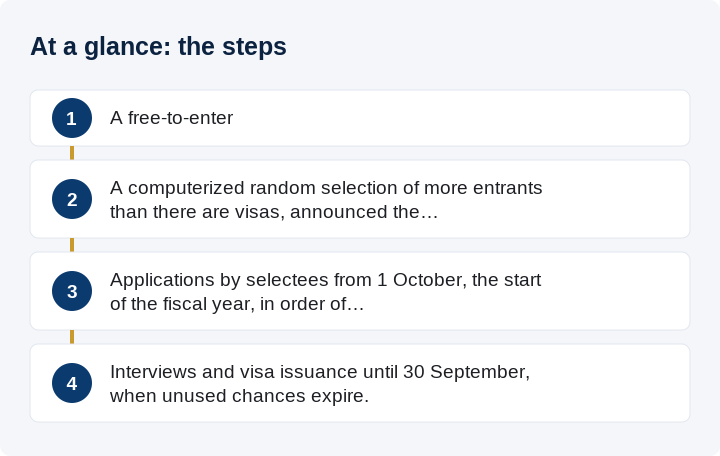
Created by the Immigration Act of 1990, the program makes up to 55,000 immigrant visas available each fiscal year to people from countries with low rates of immigration to the US. In practice about 50,000 are used, because up to 5,000 are set aside for the NACARA program. The process in a normal year:
Because the State Department selects more people than there are visas, selection only gives you the right to apply. You must still qualify, pass background checks and be interviewed before the fiscal year ends, and visas can run out before your turn. See what to do if you are selected.
Presidential proclamations issued in 2025 suspended immigrant visas, including diversity visas, for nationals of a list of countries that grew to 39. A selectee from one of those countries generally cannot receive a visa while the restriction applies, unless an exception covers them.
The only official website is dvprogram.state.gov. The State Department never emails selectees to tell them they won or asks for payments by wire transfer. See DV lottery scams.
Entering costs $1. If you are selected and proceed, each person immigrating pays the $330 DV processing fee, the panel physician's medical exam fee (which varies by country), costs for police certificates and translations, and the $235 USCIS immigrant fee after arrival. Families should also budget for travel and the first months of living costs in the US, because consular officers check that new immigrants will not become a public charge.
Eligibility depends on where you were born, not your passport. And there are two legal ways around an excluded country.
A country is excluded if more than 50,000 of its natives immigrated to the US in the previous five years through family and employment categories. The list is recalculated for every program year and published in the instructions.
In recent programs the excluded list has included: Bangladesh, Brazil, Canada, China (mainland-born), Colombia, Dominican Republic, El Salvador, Haiti, Honduras, India, Jamaica, Mexico, Nigeria, Pakistan, the Philippines, South Korea, the United Kingdom (except Northern Ireland) and its dependent territories, Venezuela and Vietnam. People born in Hong Kong, Macau and Taiwan have been eligible. Always check the instructions for the specific year.
Visas are divided among six regions (Africa, Asia, Europe, North America, Oceania, South America with Central America and the Caribbean), weighted toward regions with lower immigration. No single country can receive more than 7% of diversity visas in a year.
Being eligible to enter the lottery is different from being able to receive a visa. Nationals of countries under the 2025 travel restrictions have generally been unable to receive immigrant visas. See the program status.
Countries move on and off the list as their immigration numbers change. Nigeria, for example, was excluded for many years because family immigration from Nigeria exceeded 50,000 over five years. Other countries have regained eligibility after demand fell. The list for each program year is calculated by US Citizenship and Immigration Services and published by the State Department in the instructions before the entry period opens.
A hypothetical man was born in India, which has been excluded, but his wife was born in Nepal, which has been eligible. He can enter claiming Nepal, provided his wife is listed on the entry and both immigrate together. A woman born in Mexico to parents from Spain who were only visiting Mexico at the time of her birth may be able to claim Spain, because neither parent was born in or resided in Mexico.
Yes, if you are eligible by country of birth and education. If selected, you may adjust status in the US if you are in lawful status, or return to your country for consular processing.
No. You can enter the lottery even if you have another petition pending.
You can receive help, but you must provide the information and keep your confirmation number. Paying large fees is unnecessary.
The program is created by law, and only Congress can abolish it. Bills to end it have been introduced several times. The 2025–2026 pause is an executive action being challenged in court.
Not on the basis of your citizenship. Eligibility is based on country of birth, unless one of the two exceptions applies.
The travel ban affects visa issuance, not entry into the lottery itself, but a selectee from a restricted country would generally not receive a visa while the restrictions remain.
In the official instructions for each program year on travel.state.gov.
Disclaimer. This article is general information, not legal advice, and it is not affiliated with any government agency. US immigration rules, fees and processing times change often, and they changed repeatedly in 2025 and 2026. Confirm current requirements on uscis.gov and travel.state.gov, or speak with a licensed immigration attorney or a DOJ-accredited representative.
Step-by-step DV entry guide: the education or work requirement, who to list, passport details, the $1 fee, photo rules and the mistakes that disqualify entries.
How to check DV results safely, read your case and rank number, follow regional cutoffs in the Visa Bulletin and recognize the scams that target entrants.
What DV selectees must do: the DS-260, documents, fees, the consular interview, adjusting status in the US and the absolute 30 September deadline.