Unemployment Benefits for Immigrants: Eligibility by Status
How state unemployment insurance works for immigrants: who qualifies, the work authorization requirement, visa holders after job loss, applying, and what it means for public charge.
 Tradiciones del Mundo
US medical bills confuse even lifelong residents. Knowing how billing works, and your rights, can cut what you owe dramatically.

Key points
A single hospital visit can produce several bills: from the hospital, each doctor, the laboratory and the ambulance. Prices vary widely, insurance adjustments are hard to follow, and errors are common. For immigrants, who may be new to insurance or uninsured, the system is especially confusing. This guide explains how to read and challenge bills and how to get help paying them.
A medical bill is often the start of a conversation, not the final word.
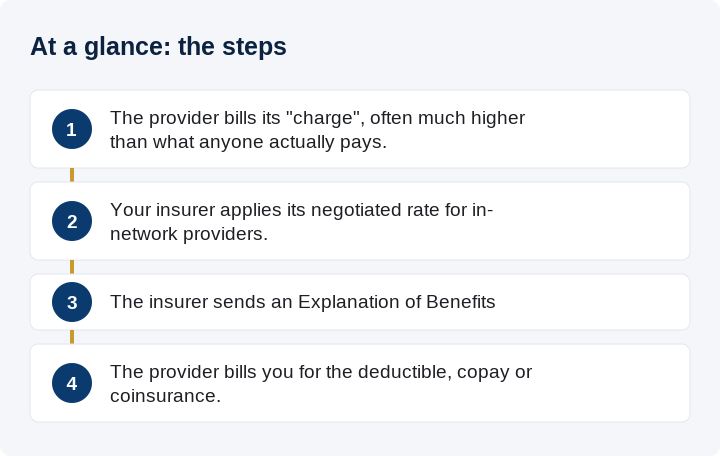
Never pay a bill before the EOB arrives, unless it is a copay at the visit.
Nonprofit hospitals, which are most US hospitals, must have written financial assistance policies under federal tax law, and limit charges to eligible patients. Many offer free or discounted care to patients below certain income levels, sometimes well above the poverty line. Ask for the application even after receiving a bill; some policies apply retroactively. Immigration status is often not required, though policies vary.
The three credit bureaus stopped reporting paid medical collections, and medical collections under $500, in 2023. A federal rule to remove most medical debt from credit reports was vacated by a court in 2025, so larger unpaid medical debts can still appear. Some states have passed their own protections. Avoid putting medical bills on high-interest credit cards before exhausting assistance and payment plans.
A hypothetical uninsured worker receives a $9,000 emergency room bill for a broken arm. She requests an itemized bill and finds a duplicated imaging charge. She applies for the hospital's financial assistance program, qualifies for a 75% discount based on her income, and sets up an interest-free payment plan for the rest. Her final cost is a small fraction of the original bill.
For scheduled care, you can often lower costs before anything happens. Ask your insurer which facilities are in network, and compare prices using your insurer's cost estimator or hospital price lists. Imaging centers and outpatient surgery centers are frequently cheaper than hospital departments for the same procedure. Urgent care clinics and telehealth cost far less than emergency rooms for minor problems. If you are uninsured, ask for the cash price and a good faith estimate in writing before the appointment, and keep it to compare with the final bill.
Some providers offer medical credit cards with "no interest" promotions. Many use deferred interest: if the full balance is not paid by the end of the promotional period, interest is charged back to the original date of purchase. Apply for financial assistance and interest-free payment plans first.
Keep a folder with every bill, EOB, letter and note of each call, including dates and names. Organized records make disputes and assistance applications much faster.
When a bill seems wrong, ask politely but persistently; billing departments correct errors every day.
If a medical bill is sent to a collection agency, ask the collector to validate the debt in writing, check whether insurance or financial assistance should have covered it, and negotiate. Under federal law, collectors cannot harass you or threaten actions they cannot take, and you can ask them to communicate only in writing.
Under the current public charge rule, hospital financial assistance is not a counted benefit; check for changes if a new rule is finalized.
No, emergency screening and stabilization are required regardless.
Hospital financial counselors, patient advocates, legal aid organizations and your state's consumer protection office.
Disclaimer. This article is general education, not financial, investment, tax or insurance advice, and it does not recommend any specific product or provider. Prices, rates, limits and rules change; check official sources such as irs.gov, consumerfinance.gov and investor.gov, and consider a licensed professional for decisions about your own money.
How state unemployment insurance works for immigrants: who qualifies, the work authorization requirement, visa holders after job loss, applying, and what it means for public charge.

How homeowners insurance works in the US: dwelling, property and liability coverage, policy types, flood and earthquake gaps, what affects premiums and how to file claims.

How dental and vision coverage work in the US, why they are separate from health insurance, plan types, annual maximums, waiting periods and low-cost alternatives.