Health Insurance for Immigrants in the US: Options by Status
How immigrants get health insurance: employer plans, the ACA Marketplace, Medicaid and the five-year bar, visitor insurance and the key terms to compare plans.
 Tradiciones del Mundo
In the US, teeth and eyes are usually insured separately from the rest of your body. Many newcomers discover this at their first dentist bill.
Key points
Medical insurance rarely covers routine dental or eye care for adults. Employers often offer dental and vision as separate, inexpensive add-ons, and individual plans can be bought directly. Whether they are worth it depends on your expected needs. This guide explains how they work.
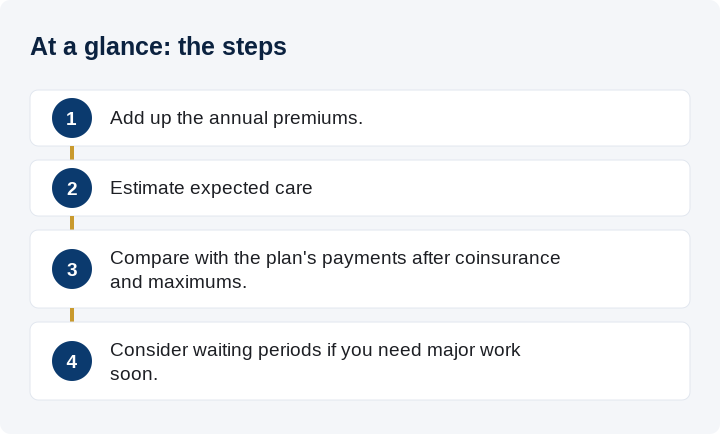
Dental insurance works best for prevention. For major work, check the annual maximum before you count on the plan.
| Service type | Typical coverage |
|---|---|
| Preventive (cleanings, exams, X-rays) | Often 100% |
| Basic (fillings, simple extractions) | Often around 70%–80% |
| Major (crowns, bridges, root canals) | Often around 50%, sometimes after a waiting period |
| Orthodontics | Often limited to children, with a lifetime maximum |
Most plans have an annual maximum the plan will pay, commonly in the range of one to a few thousand dollars, after which you pay everything.
Vision plans usually cover an annual eye exam and an allowance for glasses or contact lenses. Eye diseases such as glaucoma or injuries are usually billed to medical insurance, not the vision plan.
Employer plans are usually worth it because the employer pays part of the premium and they are bought with pre-tax money.
A hypothetical newcomer needs two crowns soon after arriving. A new individual dental plan has a 12-month waiting period for major work, so it would not help this year. A dental school clinic quotes a much lower price than private dentists, and she pays from her HSA. She then enrolls in her employer's dental PPO for future preventive care.
Dental bills list each procedure with a code, the dentist's fee, the amount the plan allows, what the plan pays and what you owe. In-network dentists accept the plan's allowed amount as full payment; out-of-network dentists can bill you the difference ("balance billing"). Before major treatment, ask the dentist to submit a pre-treatment estimate (predetermination) to the insurer, which tells you in advance how much the plan will pay.
Individual dental plans often impose waiting periods: none for preventive care, several months for basic care and up to a year for major care. Some plans also exclude replacing teeth that were missing before coverage began. Employer plans are less likely to have these restrictions. Read the summary of benefits carefully before enrolling, especially if you already know you need work done.
Under the Affordable Care Act, dental and vision care for children are essential health benefits. Marketplace plans must offer pediatric dental coverage either within the plan or through a stand-alone dental plan. Medicaid and CHIP cover children's dental care in every state, and many school programs offer vision screenings and free glasses for eligible children.
Many dental plans reset their annual maximum each January. If you need several treatments, splitting them across two plan years can double the amount the plan pays. Ask your dentist to plan the timing with you.
Also check whether your employer offers a vision discount program at no cost, separate from paid vision insurance.
For a dental emergency, call your dentist first; many keep slots for urgent cases. Hospital emergency rooms can treat pain and infection but rarely provide dental procedures, so the bill may not solve the problem.
Prevention remains the cheapest dental plan of all: regular cleanings catch problems early.
Ask your employer's benefits team for the full plan document, not only the summary.
Original Medicare generally does not cover routine dental care; some Medicare Advantage plans include it.
Yes, stand-alone dental plans are available, and children's dental is an essential benefit.
Many people do routine care abroad during visits; US plans rarely reimburse it.
Disclaimer. This article is general education, not financial, investment, tax or insurance advice, and it does not recommend any specific product or provider. Prices, rates, limits and rules change; check official sources such as irs.gov, consumerfinance.gov and investor.gov, and consider a licensed professional for decisions about your own money.
How immigrants get health insurance: employer plans, the ACA Marketplace, Medicaid and the five-year bar, visitor insurance and the key terms to compare plans.

How immigrants buy auto and renters insurance with no US driving or credit history: state minimums, foreign licenses, what drives premiums and how to lower them.

How life and disability insurance work for immigrants: term vs permanent policies, how much coverage, visa and residency underwriting rules and beneficiaries abroad.