Dental and Vision Insurance in the US: How They Work and Whether You Need Them
How dental and vision coverage work in the US, why they are separate from health insurance, plan types, annual maximums, waiting periods and low-cost alternatives.
 Tradiciones del Mundo
Lenders require it and disasters prove its value. Homeowners insurance protects the largest asset most families own, if you choose the right coverage.
Key points
When you buy a home with a mortgage, the lender requires insurance to protect its loan. But the policy also protects you: from fire, storms, theft and lawsuits. For new homeowners, especially those who never owned a home in the US, the terms and exclusions can be confusing. This guide explains the parts of a policy and how to make good choices.
The cheapest policy often hides a large deductible or depreciated payouts. Compare coverage, not only price.
| Coverage | What it pays for |
|---|---|
| A: Dwelling | Repairing or rebuilding the house |
| B: Other structures | Fences, garages, sheds |
| C: Personal property | Furniture, clothes, electronics |
| D: Loss of use | Extra living expenses while the home is repaired |
| E: Personal liability | Injuries or damage you cause to others |
| F: Medical payments | Small medical bills for guests injured on your property |
A hypothetical family buys a house in Houston. Their lender requires homeowners insurance, and a FEMA map shows moderate flood risk outside the mandatory zone. They buy an HO-3 policy with replacement cost coverage and, separately, flood insurance through the NFIP. A year later a storm floods the ground floor; the flood policy pays for the structure, while the homeowners policy covers the roof damage from wind.
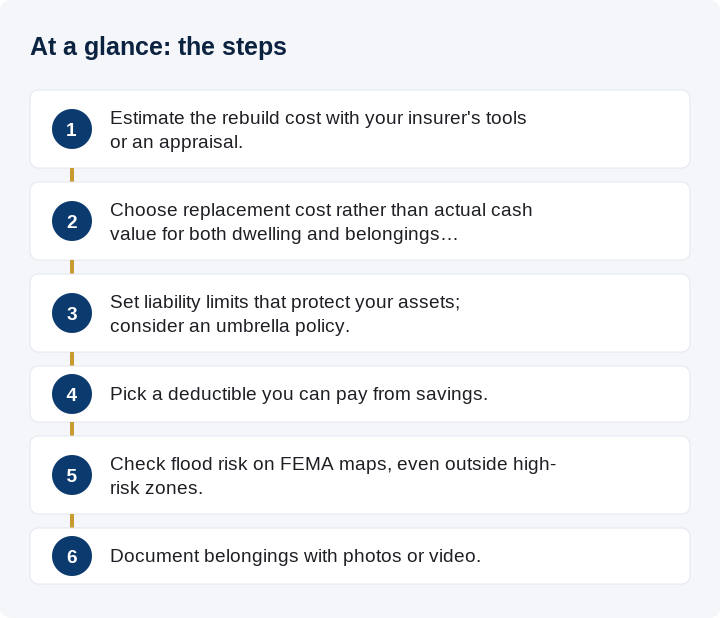
Replacement cost pays what it costs to repair or replace damaged property with new materials of similar quality. Actual cash value subtracts depreciation, so a ten-year-old roof or sofa may be worth little. For the dwelling, many insurers also offer extended replacement cost, which pays a percentage above the limit if construction prices jump after a disaster. Given rising building costs, review your dwelling limit every year.
In hurricane and windstorm regions, policies often have a separate percentage deductible, such as 2% or 5% of the dwelling limit, rather than a fixed dollar amount. On a home insured for $400,000, a 2% deductible means paying the first $8,000 of wind damage. Know this number before storm season and keep enough savings to cover it.
Liability coverage pays if a visitor is injured on your property or you accidentally damage someone else's property, and it covers legal defense. Dog bites, slips on icy steps and pool accidents are common claims. Many advisers suggest liability limits of at least $300,000, and an umbrella policy for households with significant assets.
Premiums can change significantly at renewal, especially in states affected by hurricanes, wildfires or hail. Each year, review your renewal notice, compare at least two other quotes and ask your insurer about discounts for bundling with auto insurance, installing monitored alarms, upgrading the roof or paying annually. If an insurer non-renews your policy, start shopping immediately: you usually receive advance notice, and gaps in coverage can violate your mortgage.
Keep the policy and your inventory where you can reach them after a disaster, for example in cloud storage.
A licensed independent agent can compare several insurers at once.
Finally, keep receipts for major home improvements; they help prove value after a loss.
Review your policy whenever you renovate, buy valuable items or add a pool, because each changes your risk and the coverage you need.
Not by law, but by almost every mortgage lender.
Usually yes, up to a limit, for theft while traveling.
Many states have last-resort insurance plans for high-risk properties.
Disclaimer. This article is general education, not financial, investment, tax or insurance advice, and it does not recommend any specific product or provider. Prices, rates, limits and rules change; check official sources such as irs.gov, consumerfinance.gov and investor.gov, and consider a licensed professional for decisions about your own money.

How dental and vision coverage work in the US, why they are separate from health insurance, plan types, annual maximums, waiting periods and low-cost alternatives.

How immigrants get health insurance: employer plans, the ACA Marketplace, Medicaid and the five-year bar, visitor insurance and the key terms to compare plans.

How immigrants buy auto and renters insurance with no US driving or credit history: state minimums, foreign licenses, what drives premiums and how to lower them.