Emergency Funds and High-Yield Savings: Where to Keep Your Safety Net
How much emergency savings immigrants need, where to keep them (high-yield savings, money market accounts, CDs, Treasury bills), deposit insurance and building the habit.
 Tradiciones del Mundo
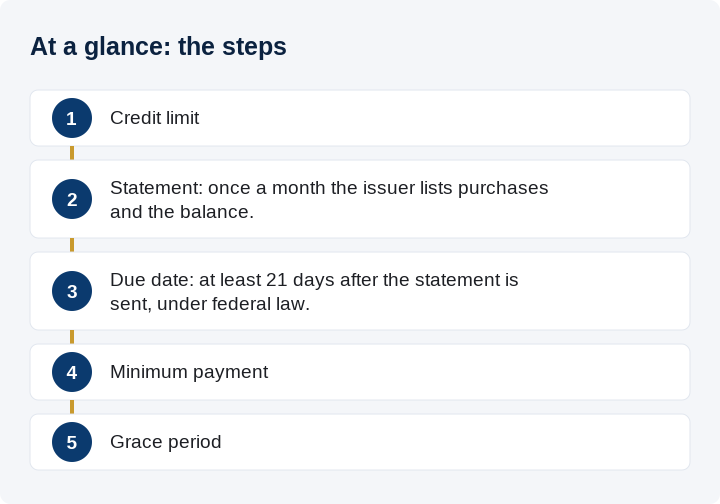
Used well, a credit card is the fastest tool to build US credit. Used badly, it is one of the most expensive forms of debt. The difference is a handful of habits.
Key points
Credit cards are everywhere in the US: for online purchases, hotel and car rental deposits, and as a safety net. For immigrants they have a second role: building the credit history that landlords, lenders and insurers check. This guide explains the mechanics, the types of cards available to newcomers and how to use them without falling into debt.
It is general education, not a recommendation of any specific card or issuer.
A credit card is not extra money. It is a short loan you repay every month, and the goal is to make the bank wait, not pay.
| Term | What it means |
|---|---|
| APR | Annual percentage rate charged on balances you carry |
| Annual fee | A yearly charge; many basic cards have none |
| Foreign transaction fee | Often about 3% on purchases abroad or in foreign currency; many cards charge none |
| Late fee | Charged if you miss the minimum payment |
| Cash advance fee and APR | Expensive, with interest starting immediately |
| Balance transfer fee | Charged when moving debt from another card |
Cash back and travel points can be valuable for people who pay in full every month. They are never worth carrying a balance: interest quickly exceeds any reward. Start with a simple no-fee card; consider rewards cards once your credit is established.
A hypothetical newcomer opens a $500 secured card and uses it only for her phone and streaming bills, about $80 a month, with autopay of the full balance. Her reported utilization stays near 16%. After eight months she has a credit score, and the issuer upgrades her to an unsecured card with a $2,000 limit and returns her deposit. A year later she qualifies for a no-annual-fee card with no foreign transaction fees, useful for trips home.
Once the debt is gone, keep the card open and use it lightly, so the account keeps adding positive history without new balances.
Check your statements every month as well: catching an unknown charge early makes the dispute process simple and fast.
Some issuers accept an ITIN, and a few accept a passport for certain products.
It can, by reducing available credit and, over time, the age of your accounts.
No. They work differently and may or may not be reported to bureaus; they also make it easy to overspend.
There is no magic number. One or two well-managed cards are enough to build strong credit.
Disclaimer. This article is general education, not financial, investment, tax or insurance advice, and it does not recommend any specific product or provider. Prices, rates, limits and rules change; check official sources such as irs.gov, consumerfinance.gov and investor.gov, and consider a licensed professional for decisions about your own money.
How much emergency savings immigrants need, where to keep them (high-yield savings, money market accounts, CDs, Treasury bills), deposit insurance and building the habit.
How green card holders, visa holders and ITIN borrowers buy homes in the US: mortgage types, down payments, credit, closing costs, the 2025 FHA change and common pitfalls.
How immigrant entrepreneurs finance a US business: bank loans, the 2025–2026 SBA citizenship rules, CDFIs, microloans, credit unions, investors and building business credit.