Understanding and Negotiating US Medical Bills
How US medical billing works, the No Surprises Act, good faith estimates for the uninsured, hospital financial assistance, negotiating bills and medical debt.
 Tradiciones del Mundo
A fall, a heart problem or an infection during a visit can produce hospital bills of tens of thousands of dollars. Visitor insurance is how families manage that risk.
Key points
Parents visiting immigrant children often stay for months: helping after a birth, spending holidays, or simply reconnecting. US health care is expensive, and visitors cannot use public programs or Marketplace insurance. Emergency rooms must stabilize patients regardless of insurance, but the bill follows. This guide explains how visitor insurance works and how to choose a plan carefully.
It is general education, not a recommendation of any specific insurer.
Read the exclusions before the benefits. For older travelers, what a plan does not cover matters most.
| Type | How it pays | Pros and cons |
|---|---|---|
| Fixed benefit (limited) | Pays set amounts per service (for example, a fixed sum per hospital day) | Cheaper; real bills often far exceed the fixed amounts |
| Comprehensive | Pays a percentage of eligible costs after a deductible, up to a maximum | More expensive; much better protection against large bills |
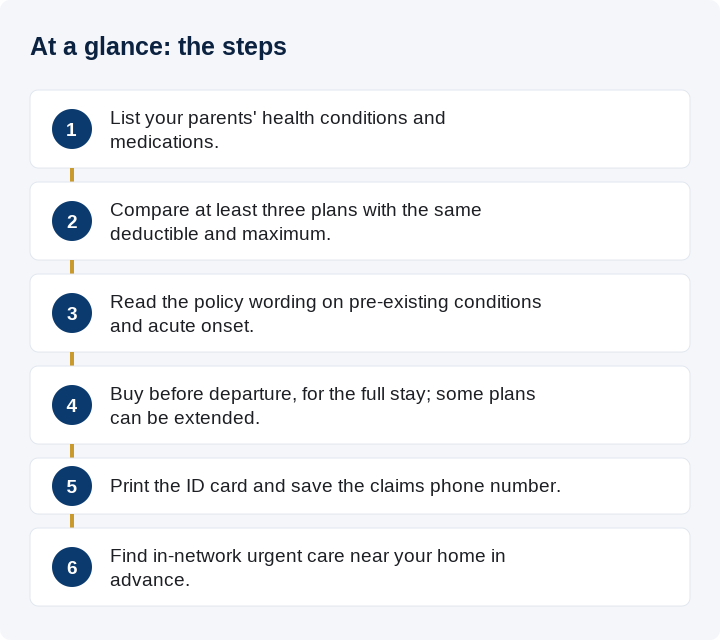
For non-emergencies, use urgent care clinics or telemedicine, which cost far less than emergency rooms. In a real emergency, go to the nearest emergency room and call the insurer as soon as possible. Keep every bill and medical report: claims usually require itemized bills and records.
A hypothetical couple aged 68 and 70 visits their daughter in California for four months. She buys a comprehensive plan with a $100,000 maximum per person, a $250 deductible and acute-onset coverage. In the third month, her father has chest pain and is admitted for two days. The bill exceeds $30,000. The plan's acute-onset provision applies to his previously stable heart condition, and after the deductible and coinsurance, the family pays a fraction of the bill. With a fixed-benefit plan, they would have paid most of it.
Write the answers down for each plan; side-by-side comparison makes the differences obvious.
Parents who become permanent residents can buy Marketplace plans but are usually not eligible for Medicare until they have five years of residence or enough work credits. Families sponsoring parents should plan private coverage for those first years as well. See health insurance for immigrants.
Whatever plan you choose, carry the insurer's contact details at all times during the visit.
Trip insurance covers cancellations, lost luggage and delays, sometimes with small medical benefits. Visitor medical insurance focuses on medical costs during a long stay. For parents spending months in the US, the medical plan is the priority.
Buying early also locks in coverage from the first day of the visit.
Keep the policy documents with their passports.
It is not generally required by law, though it is strongly advisable and some consulates ask about how medical costs would be covered.
Usually not; employer plans cover employees, spouses and children.
Yes; see medical bills.
Disclaimer. This article is general education, not financial, investment, tax or insurance advice, and it does not recommend any specific product or provider. Prices, rates, limits and rules change; check official sources such as irs.gov, consumerfinance.gov and investor.gov, and consider a licensed professional for decisions about your own money.

How US medical billing works, the No Surprises Act, good faith estimates for the uninsured, hospital financial assistance, negotiating bills and medical debt.
How state unemployment insurance works for immigrants: who qualifies, the work authorization requirement, visa holders after job loss, applying, and what it means for public charge.

How homeowners insurance works in the US: dwelling, property and liability coverage, policy types, flood and earthquake gaps, what affects premiums and how to file claims.