Foreign Investments After Immigrating: PFICs, Pensions and Property
What happens to home-country investments when you become a US tax resident: PFIC rules for foreign funds, foreign pensions, rental property abroad and reporting.
 Tradiciones del Mundo
Retirement accounts are the most powerful tax break most workers have. Immigrants often skip them because they might not stay. That is usually a mistake.
Key points
The 401(k) and the Individual Retirement Account (IRA) let your savings grow without yearly tax on gains. Many immigrants hesitate because they may return home one day. In most cases the tax benefits and employer contributions still outweigh the costs, and the money does not disappear if you leave. This guide explains how the accounts work and what to consider if your future is international.
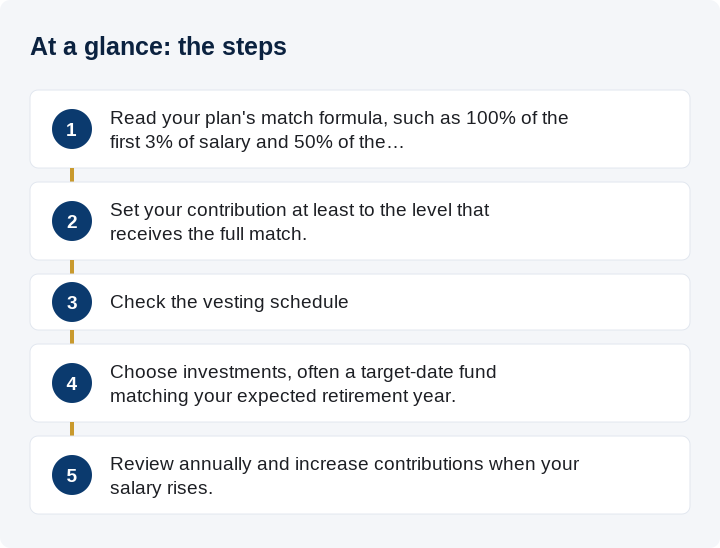
An employer match is the closest thing to free money in personal finance. Contribute at least enough to receive all of it.
| Account | Who offers it | 2026 contribution limit |
|---|---|---|
| 401(k) / 403(b) | Employers | $24,500 employee deferrals; catch-up $8,000 at 50+, higher catch-up at ages 60–63 |
| Traditional IRA | You, at any brokerage or bank | $7,500 combined with Roth IRA; $1,100 catch-up at 50+ |
| Roth IRA | You | Same combined limit; income limits apply |
| HSA (with eligible health plan) | Employer or you | Separate limits; triple tax advantage for medical costs |
Limits are set by the IRS each year; check the current figures before contributing.
For immigrants who may retire abroad, another country's treatment matters: some countries tax US retirement withdrawals, and many do not recognize Roth tax-free status. Tax treaties may help.
Your 401(k) and IRA remain yours. Options include leaving the money invested, rolling a 401(k) into an IRA, or withdrawing. Withdrawals before 59½ generally incur a 10% additional tax plus income tax, with exceptions. After you become a nonresident, US withholding on distributions is generally 30% unless a tax treaty reduces it. Some US brokers restrict accounts for customers living abroad, so plan ahead.
The US has totalization agreements with many countries that coordinate social security credits, so that work periods in both countries can count toward benefits and you avoid paying into two systems at once.
Consider a hypothetical software engineer on an H-1B earning $120,000. Her employer matches 100% of the first 4% of salary. If she contributes 4% ($4,800), the employer adds another $4,800 a year. If she contributes nothing because she "might go home", she forfeits that $4,800, every year. Suppose she contributes 10% ($12,000) as traditional pre-tax deferrals. At a combined federal and state marginal rate of about 30%, her take-home pay falls by roughly $8,400, not $12,000, because the contribution reduces her taxable income.
Five years later she returns to her home country. Her account, invested in a diversified target-date fund, remains in her name. She can leave it invested until retirement, avoiding the 10% early-withdrawal penalty, or withdraw and pay US tax (withheld at 30% for nonresidents unless a treaty lowers it) plus the penalty. Even with the penalty, the employer match and years of tax-deferred growth often leave her ahead of someone who saved the same money in a taxable account, though the result depends on the tax rules of the country where she lives when she withdraws.
When you leave an employer, you can usually:
Ask for a direct rollover (trustee to trustee). If the plan pays you directly, it must withhold 20%, and you have 60 days to deposit the full amount, including the withheld part, to avoid tax.
Yes, exactly like citizens.
You need earned income at least equal to the contribution, with a spousal IRA exception for married couples.
Assets, including retirement savings, can be positive factors in the totality of circumstances.
Disclaimer. This article is general education, not financial, investment, tax or insurance advice, and it does not recommend any specific product or provider. Prices, rates, limits and rules change; check official sources such as irs.gov, consumerfinance.gov and investor.gov, and consider a licensed professional for decisions about your own money.
What happens to home-country investments when you become a US tax resident: PFIC rules for foreign funds, foreign pensions, rental property abroad and reporting.
How US stock markets work: exchanges, shares, indexes like the S&P 500, orders, market swings, dividends, risk and the basic principles of long-term investing.
The difference between index funds and actively managed funds, how fees compound, what long-term performance studies show, ETFs vs mutual funds and how to compare funds.