When Things Go Wrong: RFEs, Delays, Denials and Waivers
How to respond to a Request for Evidence, track a delayed case, request an expedite, handle inadmissibility with waivers and what to do after a denial.
 Tradiciones del Mundo
Most delays in adjustment cases come from incomplete packages and unprepared interviews. These are the three steps where preparation pays off most.
Key points
This guide follows an adjustment case in chronological order: assembling and filing the package, the short biometrics visit, and the interview where an officer reviews everything under oath.
If you do not know an answer at the interview, say so. Do not guess.
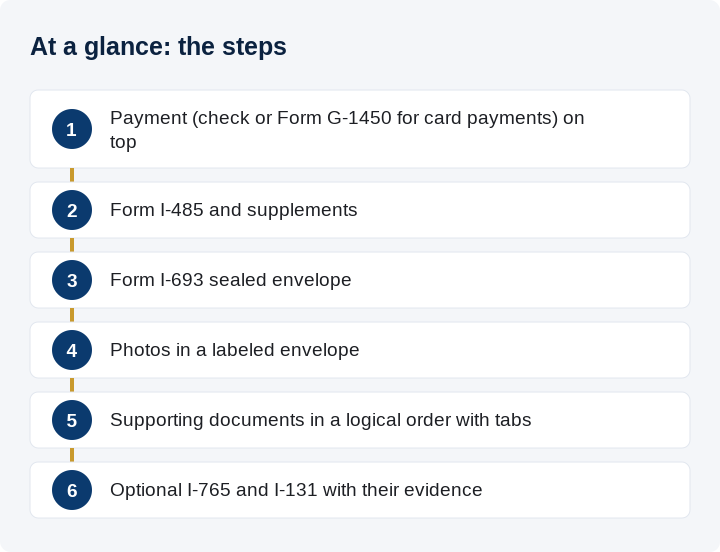
Most I-485 delays come from missing documents. Use this list to build a complete package the first time.
Certified court dispositions for any arrest, even if dismissed, and documents for any prior removal, visa refusal or status violation.
Every foreign-language document must include a full English translation and a translator's certification stating competence in both languages and that the translation is accurate. Submit copies, not originals, unless instructions say otherwise, and bring originals to the interview.
Keep a complete copy of everything you filed. You will need it to prepare for the interview, respond to RFEs and complete future forms such as the N-400.
A short visit for fingerprints, a photo and a signature. Missing it, though, can sink your application.
After you file, USCIS sends a notice (Form I-797C) with a date, time and Application Support Center (ASC). Staff take your fingerprints, a photo and a digital signature. These are used for FBI background checks and to produce your card.
You can request a new date online through your USCIS account or by calling the USCIS Contact Center before the appointment, and you must show good cause. Missing the appointment without rescheduling can lead to denial for abandonment.
Some ASCs accept people before their appointment date; it depends on the center and is never guaranteed.
USCIS sometimes reuses biometrics from an earlier application and does not schedule a new appointment. A separate biometrics fee no longer applies to most forms since April 2024.
The visit often takes less than an hour.
The interview is a conversation under oath. Preparation is mostly about knowing your own file and bringing the right originals.
You and, in marriage cases, your spouse meet an officer at a USCIS field office. The officer places you under oath, reviews the forms with you, checks documents and asks questions. Interviews often last 20 to 60 minutes. You can bring an attorney and, if needed, an interpreter (rules for interpreters have changed; check your notice).
If you do not know an answer, say so. Do not guess. If you notice an error in your forms, tell the officer and correct it under oath.
You may be approved on the spot, receive a request for more evidence (often Form N-14 or an RFE) or be told the case needs further review.
Officers go through the I-485's yes/no questions: arrests, convictions, drug use, prostitution, smuggling, immigration violations, military or security involvement, public charge and others. If you answered "yes" to any, the officer will ask for details and documents. Changing an answer at the interview without explanation can raise credibility concerns.
USCIS has expanded online filing for the I-485 in some categories. Check the form page; online filing is cheaper.
Provide a certificate of non-availability and secondary evidence, such as baptismal records and affidavits, following the State Department's reciprocity guidance.
Yes, each person files their own I-485.
Yes. If they have their own appointments, bring each notice.
USCIS may ask you to return, or accept police clearances instead after repeated attempts.
Only with permission to reschedule to another location.
No. Biometrics are separate from the interview.
Yes, for good cause, through the Contact Center or online, as early as possible.
Disclaimer. This article is general information, not legal advice, and it is not affiliated with any government agency. US immigration rules, fees and processing times change often, and they changed repeatedly in 2025 and 2026. Confirm current requirements on uscis.gov and travel.state.gov, or speak with a licensed immigration attorney or a DOJ-accredited representative.
How to respond to a Request for Evidence, track a delayed case, request an expedite, handle inadmissibility with waivers and what to do after a denial.
Every main green card fee in 2026, the I-864 Affidavit of Support income rules and joint sponsors, and how the public charge test works.
How US immigration court works: the Notice to Appear, master and individual hearings, defenses such as asylum and cancellation, appeals to the BIA and why attending every hearing matters.