Diversity Visa Lottery: How It Works, Eligibility and 2026 Status
The green card lottery explained: how selection works, which countries are eligible, chargeability exceptions, and the current status of the program after the 2025 pause.
 Tradiciones del Mundo
Selection starts a race against the fiscal year. Acting early and carefully is the single best way to turn a selection letter into a green card.
Key points
DV selectees face the tightest deadline in US immigration. This guide follows the path in order, from the first forms to the interview, explains the alternative for selectees already in the US, and ends with the deadline rule and how to protect yourself against it.
Selection expires on 30 September, even if the delay was caused by the government.
Selection starts a race against the fiscal year deadline. Acting early and carefully is the single best way to turn selection into a green card.
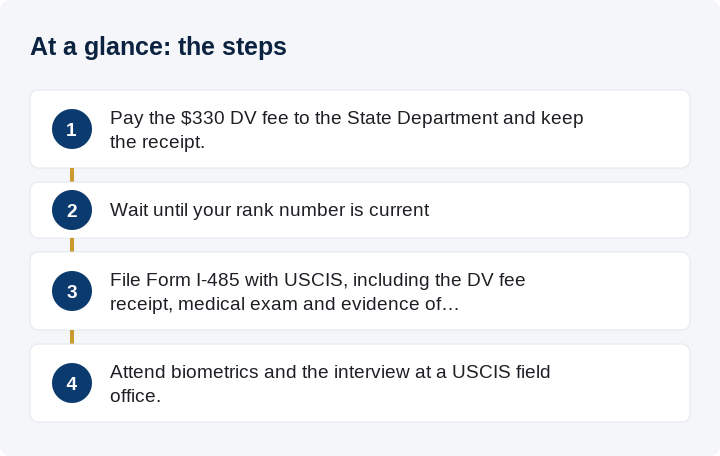
Submit the online immigrant visa application (DS-260) for yourself and each family member who will immigrate. Do it soon: interviews are scheduled in rank order only for people who have submitted the form.
When instructed, send scanned civil documents to the Kentucky Consular Center: birth certificates, marriage and divorce certificates, police certificates, and evidence of education or work experience.
Your case number becomes eligible when it is below the cutoff for your region in the monthly Visa Bulletin.
Book a medical exam with an embassy-approved panel physician and pay the $330 DV processing fee per person, usually at the embassy.
Attend with all originals. Officers verify education, family relationships and admissibility, including the risk of becoming a public charge. See DV interview tips.
The immigrant visa is usually valid for up to six months. Pay the USCIS immigrant fee ($235) before travel so your card is produced.
You may be able to adjust status instead. See DV adjustment of status.
Because of the 2025–2026 pauses and court cases, check whether visas are currently being issued to selectees from your program year before you resign from a job or sell property.
The DV interview is short and document-heavy. Most refusals come from paperwork, not nerves.
If you receive a form 221(g) refusal for further processing, respond quickly. Visas cannot be issued after 30 September, whatever the reason for the delay.
Officers ask how you will live in the US. Strong answers include savings statements converted to dollars, a job offer, a US relative's or friend's Affidavit of Support, and a realistic plan for housing. Applicants with no resources and no sponsor are at risk of a public charge refusal.
If you are in the US in lawful status when you are selected, you may be able to get your green card without leaving, but the deadline is even tighter.
Selectees who are in the US after a lawful admission, who have maintained status and are otherwise eligible to adjust status. Overstays and unauthorized work generally make DV selectees ineligible to adjust.
USCIS must approve the case and the State Department must allocate a visa number by 30 September. Field office backlogs make this difficult, and USCIS placed holds on DV adjustment cases during 2026. Talk to an attorney about requesting an expedite and whether consular processing abroad would be faster.
A selectee living in the US who is out of status, has worked without authorization or entered without inspection is usually not eligible to adjust. Leaving the US for an interview can trigger unlawful presence bars, so these selectees need individual legal advice before choosing a route. Selectees in valid status who are worried about USCIS delays sometimes choose consular processing in their home country because embassies may be faster.
A hypothetical DV-2026 selectee in valid H-1B status sees her rank number become current in March. She pays the DV fee, files the I-485 in April and attends biometrics in May. She requests an expedite citing the fiscal year deadline. Approval must arrive before 30 September.
Diversity visas cannot be issued after 30 September of the program year. No other green card category has such an absolute deadline.
The law states that DV selectees remain eligible only through the end of the fiscal year for which they were selected. A DV-2026 selectee must receive a visa or adjustment approval by 30 September 2026. After that, the selection is worthless, even if the delay was caused by the government.
Derivative spouses and children must also receive their visas by that date. Those "following to join" the principal later must do so within the same fiscal year.
Selectees have sued many times when government delays, COVID-era suspensions or travel bans prevented processing. Courts have generally held they cannot order visas to be issued after the fiscal year ends, though in a few cases they required the government to preserve numbers while the case was decided. The 2025–2026 litigation over the program pause raised the same issue again.
A hypothetical selectee from Africa has a high rank number that becomes current only in August. Her interview is scheduled for 20 August. The officer issues a 221(g) refusal for further administrative processing. If the processing does not end and the visa is not issued by 30 September, her selection expires permanently, even if the checks clear in October.
Yes. Marriages after the entry but before the visa is issued are acceptable if genuine, and the spouse can immigrate as a derivative.
The Child Status Protection Act may protect the child. Submit the DS-260 for the child as soon as possible.
Yes. Everyone immigrating must appear, including children.
If approved, usually within days or a couple of weeks with the visa inside.
There is no formal appeal of consular decisions, but you can provide more documents if the refusal was under 221(g).
A spouse abroad applies for a "follow-to-join" immigrant visa at a consulate within the same fiscal year.
Yes, with an approved work permit, but the timeline is so short that many DV applicants simply rely on existing status.
The selection expires and the case cannot be approved.
No. Unlike some other categories, unused diversity visas do not carry over.
Yes. The spouse and children of a selectee must also receive their visas by the end of the fiscal year.
Generally not. Courts have rarely been able to extend the statutory deadline.
Disclaimer. This article is general information, not legal advice, and it is not affiliated with any government agency. US immigration rules, fees and processing times change often, and they changed repeatedly in 2025 and 2026. Confirm current requirements on uscis.gov and travel.state.gov, or speak with a licensed immigration attorney or a DOJ-accredited representative.
The green card lottery explained: how selection works, which countries are eligible, chargeability exceptions, and the current status of the program after the 2025 pause.
Step-by-step DV entry guide: the education or work requirement, who to list, passport details, the $1 fee, photo rules and the mistakes that disqualify entries.

How to check DV results safely, read your case and rank number, follow regional cutoffs in the Visa Bulletin and recognize the scams that target entrants.