Getting a Driver's License and REAL ID as an Immigrant
How immigrants get a US driver's license: driving on a foreign license, tests, documents by status, REAL ID rules since May 2025, licenses in states that accept any status and insurance.
 Tradiciones del Mundo
Landlords usually want a credit score, US income and references, which new arrivals rarely have. There are reliable ways around each requirement.
Key points
Finding housing is often the most stressful part of arriving in the US. Competitive markets, application fees and credit checks make it hard for newcomers. This guide explains what landlords look for, how to apply without US history, what to check in a lease and what rights tenants have.
Never send money for a rental you have not seen in person or by live video, and never before signing a lease.
| Check | Typical requirement | Newcomer alternative |
|---|---|---|
| Credit score | A minimum score set by the landlord | Larger deposit, guarantor, explanation letter |
| Income | Gross monthly income around 3 times the rent | Employer offer letter, bank statements, prepaid rent |
| Rental history | References from previous landlords | Letters from landlords abroad, translated |
| Identification | Government ID, SSN for credit checks | Passport, visa or green card; ITIN |
| Background check | Evictions and some criminal records | Same |
Tenant protections come mostly from state and local law. Common rights include a habitable home, notice before the landlord enters, protection against retaliation, and return of the deposit within a set period with an itemized list of deductions. The federal Fair Housing Act prohibits discrimination based on race, color, national origin, religion, sex, familial status and disability. Some states and cities also protect immigration status or source of income.
Walk through the apartment with the landlord or alone before moving in, noting and photographing every scratch, stain and broken item, with dates. Keep a copy signed by both sides if possible. It protects your deposit when you leave.
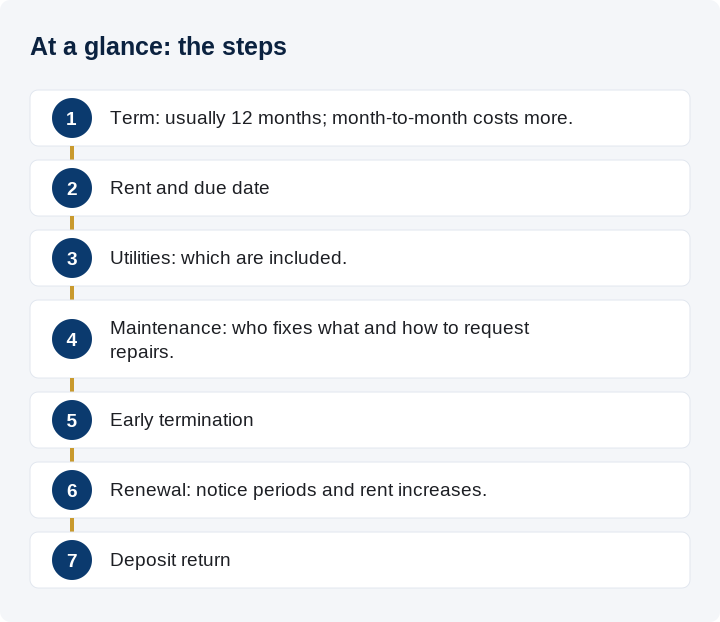
A hypothetical engineer from Vietnam relocates to Denver for a new job with an H-1B. He has no credit score. He stays in a furnished short-term rental for a month, visits apartments, and applies with his offer letter, three months of bank statements and a letter from his previous landlord in Hanoi translated into English. The management company requires a guarantor; he uses a commercial guarantor service, paying a one-time fee, and signs a 12-month lease with a clause allowing early termination with two months' notice if he is relocated by his employer.
Give written notice as required by the lease, clean the apartment, take dated photos and return all keys. Provide a forwarding address in writing so the landlord can send the deposit and the itemized deductions within the deadline set by state law. Report the new address to USCIS within 10 days as well.
Keep copies of the lease, receipts and inspection photos until the deposit is returned; they are your evidence if there is a dispute in small claims court.
Federal law allows some screening, but some states and cities restrict questions about immigration status. Treating applicants differently based on national origin is illegal.
Many leases require it; see renters insurance.
Only if the landlord or a rent-reporting service reports payments to credit bureaus.
Disclaimer. This article is general information, not legal advice, and it is not affiliated with any government agency. US immigration rules, fees and processing times change often, and they changed repeatedly in 2025 and 2026. Confirm current requirements on uscis.gov and travel.state.gov, or speak with a licensed immigration attorney or a DOJ-accredited representative.
How immigrants get a US driver's license: driving on a foreign license, tests, documents by status, REAL ID rules since May 2025, licenses in states that accept any status and insurance.
The labor rights immigrant workers have in the US regardless of status: minimum wage and overtime, safe workplaces, protection from discrimination and retaliation, and where to complain.
The most common scams aimed at immigrants: fake USCIS calls, notario fraud, visa lottery and job scams, investment and romance fraud, and how to report them safely.