Financing a Small Business as an Immigrant: Loans and Alternatives in 2026
How immigrant entrepreneurs finance a US business: bank loans, the 2025–2026 SBA citizenship rules, CDFIs, microloans, credit unions, investors and building business credit.
 Tradiciones del Mundo
Homeownership is possible for many immigrants, not only citizens. The loans available, the down payment and the paperwork depend on your status and credit history.
Key points
Buying a home is the largest purchase most families make, and for many immigrants it is a symbol of putting down roots. US mortgages are widely available, but lenders follow strict rules on credit, income documentation and, for non-citizens, immigration status. This guide explains the options and the process step by step.
Get pre-approved before you fall in love with a house. The lender's answer defines your real budget.
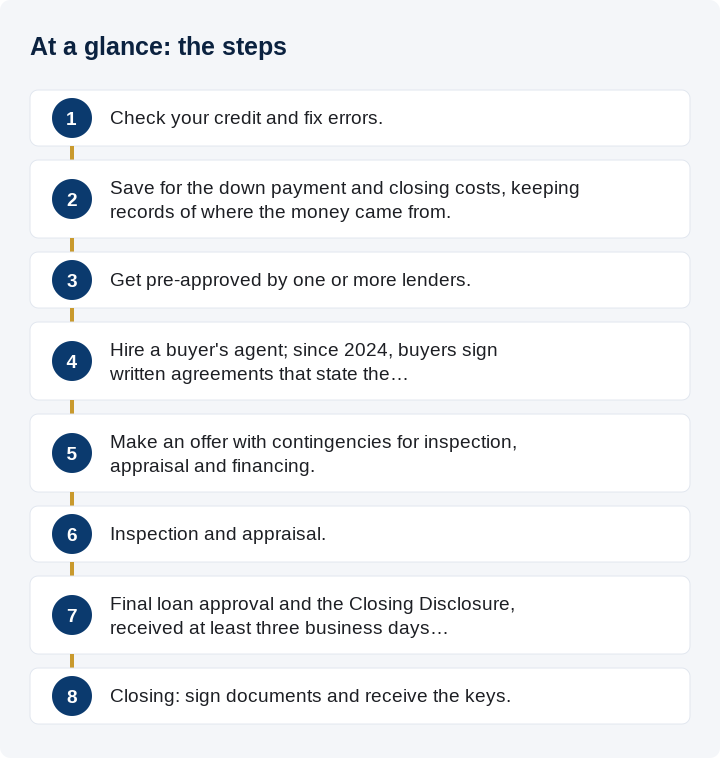
| Status | Common options |
|---|---|
| Permanent resident | Conventional (Fannie Mae/Freddie Mac), FHA, VA if eligible, USDA |
| Work visa holder (H-1B, L-1, E, O and others) | Conventional loans, subject to lender policies on status and continuity of income |
| Holder of an EAD | Conventional loans at some lenders, depending on the EAD category |
| ITIN holder | Non-qualified (non-QM) ITIN mortgages from specialized lenders |
| Foreign national living abroad | Foreign national loans with large down payments |
HUD stopped allowing non-permanent residents to obtain FHA-insured loans for case numbers assigned from 25 May 2025. Check current guidelines with lenders, as programs change.
Lenders require documentation of large deposits, including transfers from home-country accounts or gifts from relatives. Plan transfers months in advance, keep statements, and see moving your savings to the US.
A hypothetical couple with green cards and two years of US jobs wants to buy a $350,000 house. Their credit scores are good after three years of careful card use. With 5% down ($17,500) on a conventional loan, closing costs of about $10,000 and two months of reserves, they need roughly $35,000 in documented funds, part of it transferred from savings in their home country with statements showing its origin. Private mortgage insurance applies until they reach 20% equity.
A fixed-rate mortgage keeps the same principal and interest payment for its whole term, commonly 30 or 15 years. An adjustable-rate mortgage (ARM) starts with a fixed period, such as five or seven years, then adjusts with market rates within caps. ARMs can make sense for people who expect to sell or move before the adjustment, including some visa holders, but carry the risk of higher payments later. Ask lenders to show the worst-case payment.
Buying makes most sense when you expect to stay several years, have a stable income and status, and can afford the down payment while keeping an emergency fund. If you may move for work, your visa situation is uncertain, or the local price-to-rent ratio is very high, renting longer while saving and building credit can be the wiser choice.
Whichever you choose, compare the total monthly cost of owning, including taxes, insurance and maintenance, with your current rent before deciding.
A HUD-approved housing counselor can review your situation for free or at low cost before you commit.
Yes, there is no legal restriction on owning property, and many lenders offer conventional loans to visa holders.
Many state and local programs offer down payment help; eligibility rules vary and some require citizenship or permanent residence.
It can be evidence of ties to the US, positive for naturalization but sometimes questioned for nonimmigrant intent.
Disclaimer. This article is general education, not financial, investment, tax or insurance advice, and it does not recommend any specific product or provider. Prices, rates, limits and rules change; check official sources such as irs.gov, consumerfinance.gov and investor.gov, and consider a licensed professional for decisions about your own money.
How immigrant entrepreneurs finance a US business: bank loans, the 2025–2026 SBA citizenship rules, CDFIs, microloans, credit unions, investors and building business credit.
How identity theft happens, why immigrants are targeted, credit freezes, fraud alerts, IRS Identity Protection PINs, protecting immigration documents and recovery steps.
How immigrants qualify for Social Security retirement: work credits, full retirement age, totalization agreements, receiving benefits abroad and the rules for non-citizens.