TPS, Humanitarian Parole and Registry: Paths to a Green Card?
Whether Temporary Protected Status, humanitarian parole or long residence can lead to a green card, the 2025 changes, and the registry provision for pre-1972 residents.
 Tradiciones del Mundo
Congress created specific routes for children who cannot reunite with a parent, for Afghans and Iraqis who served the US, and for Cubans. Each has its own rules.
Key points
These routes are narrower than asylum or family immigration, but for the people they cover they are often the only realistic path to permanent residence. The sections below explain each one, who qualifies and where applicants most often get stuck.
SIJ green card holders can never petition for the parents who abused, neglected or abandoned them.
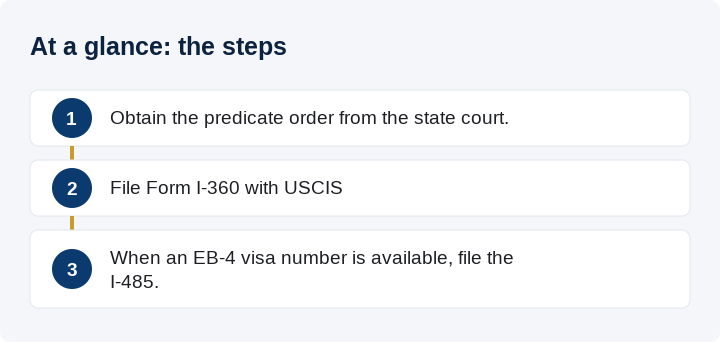
SIJ protects young people who cannot be reunited with a parent. It needs both a state court and USCIS, and timing around age 21 is critical.
Age limits for the state court's jurisdiction vary by state; some courts can act only until 18.
SIJ is part of the EB-4 category, which has had a long backlog since 2023. Children from El Salvador, Guatemala, Honduras and Mexico face especially long waits. A 2022 policy that gave deferred action and work permits to approved SIJ youth waiting for a visa was rescinded in 2025.
SIJ green card holders can never petition for their parents through immigration benefits.
A hypothetical 17-year-old boy arrived alone and lives with his aunt in California. His father abandoned him and his mother cannot care for him. In California, probate courts can appoint guardians and make SIJ findings until age 21. The aunt obtains guardianship and the court's findings; then the boy files an I-360 with USCIS before turning 21. Once approved, he waits for an EB-4 visa number to file the I-485.
SIJ requires coordinated proceedings in state court and with USCIS, often under time pressure. Many legal aid organizations specialize in SIJ cases and represent young people free of charge.
Congress created special immigrant visas for interpreters and others who risked their lives working for the United States. The process is long and has changed often.
Afghan nationals who worked for or on behalf of the US government (or the international security mission in Afghanistan) for at least one year, provided faithful and valuable service and face an ongoing serious threat, may qualify under the Afghan Allies Protection Act. The usual steps:
The Iraqi program for translators and interpreters (Section 1059) allocates 50 visas per year. The broader Section 1244 program for those who worked for the US government in Iraq stopped accepting new applications years ago.
Afghans already in the US after the 2021 evacuation often held humanitarian parole, which the government decided to end in 2025; many have pending SIV or asylum cases. Afghanistan has also been subject to the 2025 travel restrictions, which include exceptions for SIV holders. The rules have shifted frequently, so check the State Department's SIV pages and seek help from organizations specializing in Afghan cases.
Cubans have a unique green card route created in 1966. It remains law, even though the policies around Cuban migration have changed many times.
The spouse and children of a qualifying Cuban can also apply, regardless of nationality, if they live with the Cuban in the US.
File Form I-485 with proof of Cuban nationality, proof of admission or parole (such as an I-94) and one year of presence. Since 2017, when the "wet foot, dry foot" policy ended, fewer Cubans arrive with parole, and those who entered without inspection need parole first, which is now rare.
The 2023 parole program for Cubans, Haitians, Nicaraguans and Venezuelans (CHNV) was ended in 2025. Cubans who arrived under it and were in the US for one year may have qualified to adjust; others had their parole terminated. Individual advice is essential.
Approved applicants receive a residence date rolled back up to 30 months before filing, or to the date of arrival if later.
In most states, reunification with one parent must not be viable; the child can still live with the other parent.
No. SIJ-based residents and citizens can never sponsor their biological or prior adoptive parents.
Yes, your spouse and unmarried children under 21 can be included.
Yes, SIV holders have been eligible for the same resettlement benefits as refugees.
You can appeal within the time limit in the denial letter, providing new evidence or explaining errors.
If your I-360 is approved and a visa is available, you can file the I-485 in the US.
Yes, if they reside with the Cuban applicant in the US. They can adjust even if they would not qualify on their own.
Courts and the Board of Immigration Appeals have generally held that release on an order of recognizance (I-220A) is not parole, which has left many Cubans unable to use the Act. This is an area of active litigation.
No. Cuban Adjustment Act applicants are exempt from the public charge ground.
Disclaimer. This article is general information, not legal advice, and it is not affiliated with any government agency. US immigration rules, fees and processing times change often, and they changed repeatedly in 2025 and 2026. Confirm current requirements on uscis.gov and travel.state.gov, or speak with a licensed immigration attorney or a DOJ-accredited representative.
Whether Temporary Protected Status, humanitarian parole or long residence can lead to a green card, the 2025 changes, and the registry provision for pre-1972 residents.
How refugees and asylees become permanent residents after one year, the asylum one-year filing deadline and its exceptions, fees and family members.
Immigration protection for survivors of domestic abuse, serious crimes and human trafficking: VAWA self-petitions, U and T visas and their paths to a green card.